
Corvette C3 Engines 1968 - 1982
Several different engine options were available during the Corvette C3 generation. In the early years of Corvette C3 production, General Motors (GM) offered a large number of different engine options. However, as the C3 generation progressed, the number of available options decreased.
The end of the 1960s marked the golden age of engine power. Unfortunately, with the onset of the oil crisis, federal emissions restrictions were introduced, significantly reducing the horsepower of Corvettes.
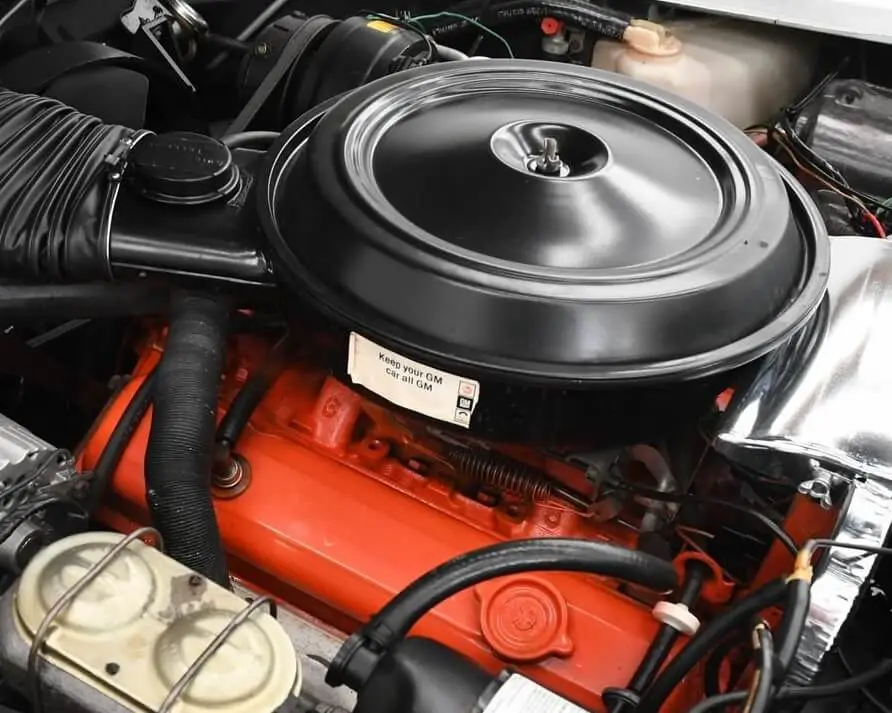
You can identify a Corvette engine by its engine code and block casting number , and you can use the Corvette C3 Decoder to decipher it. The engine's partial VIN number indicates whether it was originally installed in the car, providing a way to determine if the car is number matching.
Big block and small block differences
One of the debates between the big block and the small block is which one is better. Even from the names, you can tell the difference between them: the big block is physically larger, which therefore allows for better cooling, and larger cylinders mean more power and torque.
The disadvantage of the big block is its weight compared to the small block, which affects the handling and acceleration of the car. Big blocks are also more valuable, more expensive to repair, and consume more fuel.
Starting in 1975, the C3 Corvette only had small block engines, and in its final years of production, the engine range was very limited. When comparing horsepower, it should be noted that in 1972, GM changed the way they reported engine horsepower.
You can look at engine options from the Corvette C3 options section,and learn more about the available engine options by model year.
In the first years of the C3 generation (1968-1969), the big blocks (427 cu in) were as powerful as in the previous generation (390-435 hp). The more powerful models used 2-throat carburetors made by Holley, while the others used Rochester Quadrajets. In 1970, the big block grew to 454 cu in. Its output ranged from 289 horsepower to 425 horsepower. However, in its last three years of production, the engine was only available as a 270-275 horsepower version. The 327 cu in engine, which was also used in the C2 generation, was in production only in 1968 (with 300 and hp). After that, its displacement was increased to 350 cu in. The 350 cu in engine was the most common in the Corvette C3 and was used throughout the third generation, except for the first year of production. It is a very capable engine that can be easily modified for increased power if desired. In 1980, stricter emission restrictions forced the introduction of a 305 cu in engine in the Corvette in California. This one-year exception produced only 185 hp, the next year engineers got a 350 cu in engine to meet emissions requirements. Between 1973 and 1980, two different versions of the 350 cu in were offered. The basic model was called L48, and the performance version was called L82. The power difference varied slightly every year, but the L82 was typically about 40 hp more powerful than the L48 engine. L48 and L82 share the same block, but the L82 included many components to produce more power. The L82 had an aluminum intake (the L48 in 1980), four-bolt mains, larger heads and valves, a forged steel crank, and different pistons compared to the L48.
Corvette C3 big blocks
427 cu in (1968 - 1969)
454 cu in (1970 - 1974)

Corvette C3 small blocks
327 cu in (1968)
350 cu in (1969 - 1982)
305 cu in (1980)
L48 and L82
C3 Corvette Engine Specifications by Year
Detailed factory engine codes, horsepower ratings, and available RPO options for each model year.
- 1968 Corvette Engines
- 1969 Corvette Engines
- 1970 Corvette Engines
- 1971 Corvette Engines
- 1972 Corvette Engines
- 1973 Corvette Engines
- 1974 Corvette Engines
- 1975 Corvette Engines
- 1976 Corvette Engines
- 1977 Corvette Engines
- 1978 Corvette Engines
- 1979 Corvette Engines
- 1980 Corvette Engines
- 1981 Corvette Engines
- 1982 Corvette Engines
Aftermarket crate engine
A crate engine is a fully assembled and ready-to-install engine package designed to replace the original engine. These are frequently employed as substitutes for worn-out or damaged original engines and are also favored by enthusiasts seeking to enhance their Corvette’s performance.
Crate engines come in several varieties: brand-new factory-built units, professionally re-manufactured engines, and high-performance aftermarket builds. For Corvette C3 owners, popular choices range from period-correct small-block and big-block replacements to modern, fuel-injected performance mills that offer increased power, improved drivability, and lower maintenance demands.
Benefits
| Benefit | Description |
|---|---|
| Fast installation | Delivered assembled and test-run, reducing shop hours compared with full rebuilds. |
| Reliability | New or remanufactured cores include fresh bearings, gaskets, and machining, lowering the risk of immediate failures. |
| Performance upgrades | Many crate engines are available with higher compression, improved camshafts, and performance heads for greater output. |
| Warranty coverage | Most reputable manufacturers offer limited warranties, giving legal and financial protection. |
Considerations before purchase
| Area | What to check |
|---|---|
| Compatibility | Verify bellhousing bolt pattern, motor mount locations, oil pan clearance, and accessory fitment for the C3 chassis. |
| Transmission and driveline | Ensure the chosen engine pairs with your transmission, torque converter, and driveshaft length or plan for appropriate adapters. |
| Emissions and legality | Check local regulations if the crate engine has different emissions equipment than the original. |
| Controls and wiring | Modern crate engines with electronic fuel injection may require an ECU, wiring harness, throttle body, and sensors not present on older Corvettes. |
| Cooling and exhaust | Upgraded cooling, radiator, and exhaust routing are often necessary when increasing horsepower. |
Continue Exploring

Decoders Hub
VIN and trim tag decoders, checks, and guidance for authenticity and data lookups.

C3 Years Hub
Spotter guides and model‑year differences with jump links to each year’s in‑depth pages.

Articles Hub
Technical guides, history deep‑dives, buyer notes, and special features for the C3 era.
Share Your C3 Knowledge
Have insights to share? We welcome your expert feedback, technical discussions, and Corvette-related stories. Your contributions help keep this Corvette community thriving! Join the conversation below.
Page last updated: November 2025