
Corvette C3 Special Editions
Over the years, Chevrolet has produced several special versions of the Corvette, and three different versions were produced during the C3 generation. In 1978, when the Corvette celebrated its 25th birthday, the Pace Car Replica and Silver Anniversary Edition were available. In the last year of the C3 generation, in 1982, a version called the Corvette Collector Edition was introduced.
1978 Limited Edition Pace Car Replica
Chevrolet negotiated with the Indianapolis Motor Speedway to have the Corvette as the pace car for 1978 Indy 500, resulting in a lot of publicity for the car. It was originally planned to produce 300 of these replicas, but Chevrolet later decided to supply each dealer with one as a promotion, so the final production number was 6,502.
The Pace Car Replica's option package RPO Z78 included several exclusive features, such as the distinctive two-tone black-over-silver paint with a red pinstripe divider. Each car was supplied with a set of 15 decals, though the large "Official Pace Car" door decals were typically installed by the dealer (or owner) if desired. The new front and rear spoilers, made of flexible molded polyurethane, gave the car a more aggressive and stylish appearance. General Motors noted that these spoilers reduced aerodynamic drag by about 15 percent and improved fuel economy by approximately half a mile per gallon.
Pace Car Replicas also introduced new high-back bucket seats with improved lumbar support, originally planned for the 1979 model year but accelerated for this edition. These seats became standard on all 1979 Corvettes. The exclusive silver interior (available in full leather or leather with gray cloth inserts, paired with gray carpeting) was unique to the Pace Car Replica and brightened the cabin significantly.
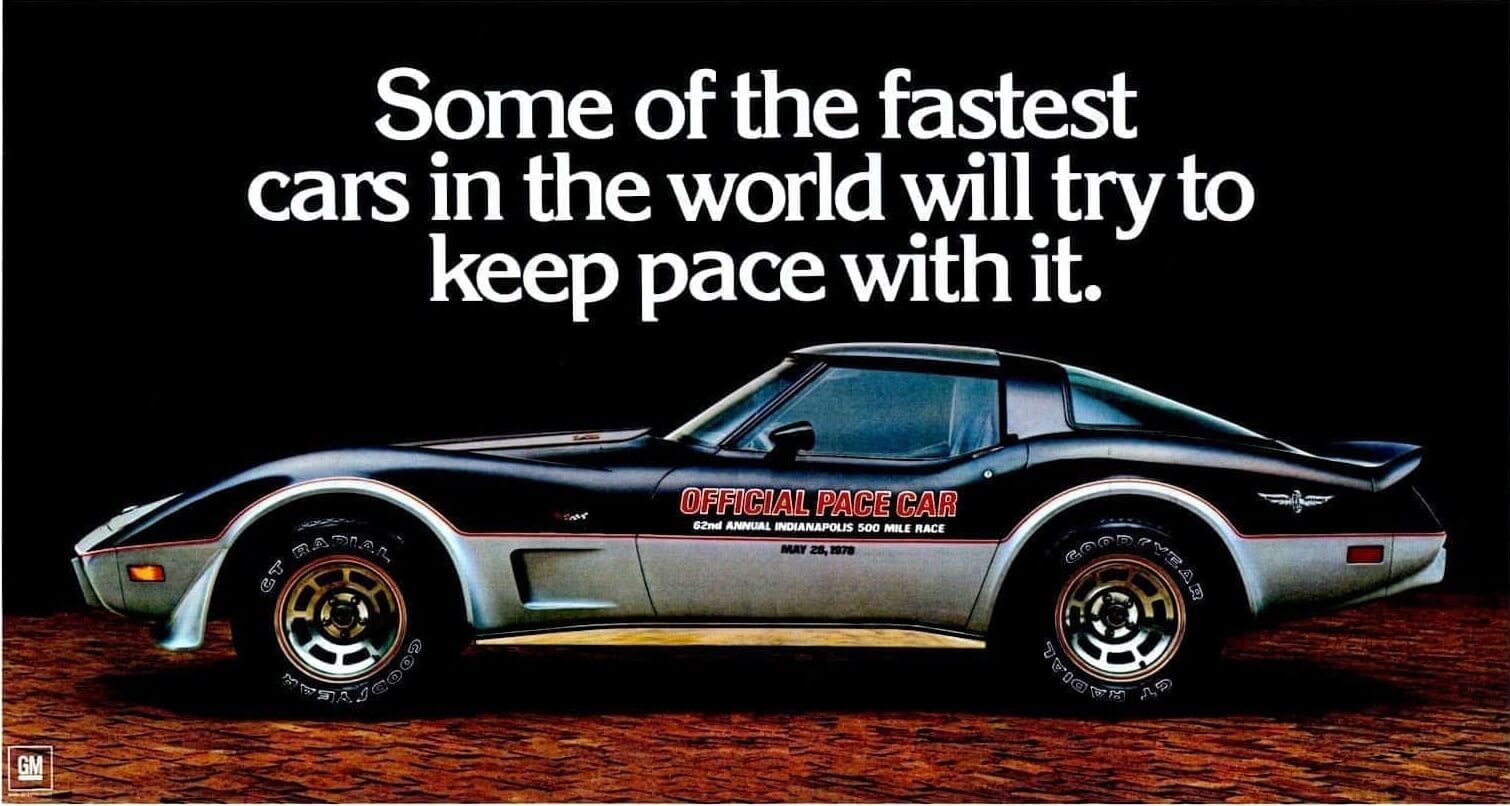
The Pace Car Replica came standard with the 350 cu in L48 V8 engine (185 hp), while the optional 350 cu in L82 V8 (220 hp) was also available. Transmission options mirrored those of other 1978 Corvettes: either a three-speed automatic or a four-speed manual. Several popular accessories, normally optional on standard models, were included as standard equipment, such as removable glass roof panels (T-tops), aluminum wheels, and sport mirrors.
Pace Car Replicas were given a special serial number, so the eighth digit of the VIN is a 9 instead of 4 in regular production, which helps to determine if the car is genuine or possibly a replica clone. The Corvette C3 decoder recognizes and reports whether the requested VIN number is a Pace Car Replica.

The original car that actually drove in the Indy 500 had the serial number 400000 with an S replacing the H in the seventh digit, indicating that it was a prototype. The value of the Corvette Pace Car Replica is slightly higher than the regular versions, you can compare these with Hagerty's tool.
1978 Silver Anniversary Edition
To celebrate the Corvette's 25th anniversary, Chevrolet offered the Silver Anniversary Edition alongside the Pace Car Replica. It proved extremely popular, nearly one-third of all 1978 Corvettes sold were Silver Anniversary models. Unlike the Pace Car, this was not a full special edition but primarily a paint package under RPO B2Z. It featured an elegant two-tone silver paint scheme (using two distinct shades of silver) separated by pinstripes, echoing the Pace Car's divider theme but in a more subtle monochromatic style.
The B2Z option required aluminum wheels and dual sport mirrors as mandatory equipment, while the rest of the car remained similar to a standard 1978 Corvette.

1982 Chevrolet Corvette Collector Edition
With anticipation building for the all-new 1983 Corvette (which was ultimately delayed), Chevrolet expected lower sales in 1982. To celebrate the final year of the C3 generation and boost interest, they introduced the Collector Edition. Priced at over $22,000, it became the first Corvette to exceed the $20,000 mark, yet 6,759 units were sold despite unlimited production.
The Collector Edition featured exclusive Silver Beige Metallic paint with fading shadow pinstripes, special cloisonné badges on the nose, sides, and rear, and finned aluminum wheels inspired by the popular 1967 bolt-on alloys.
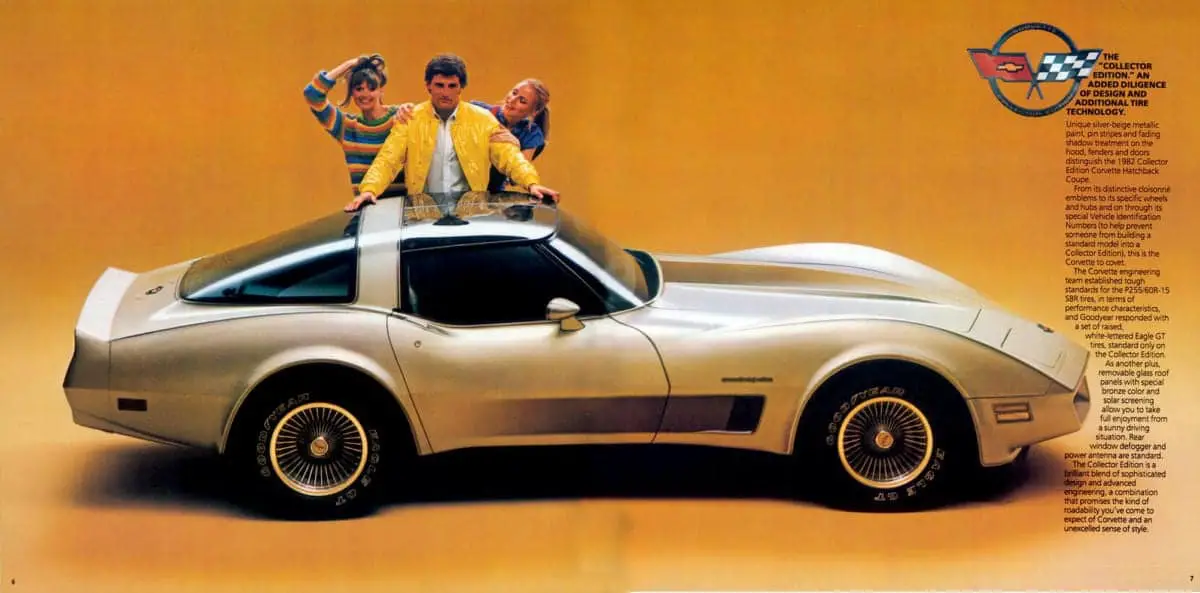
The package also included a matching silver-beige metallic interior with full leather seats and door panels, along with bronze-tinted glass T-tops. Another new feature was the functional lifting rear glass hatchback, which provided easy access to the rear storage area.
The Collector Edition shared the same engine and transmission as other 1982 Corvettes: a 350 cu in (5.7L) V8 with the new Cross-Fire Injection system producing 200 hp, paired exclusively with a four-speed automatic transmission (700R4 overdrive). No manual transmission was available that year.
A genuine Collector Edition can be identified by the VIN code, it differs from normal production, as Chevrolet also did with the Pace Car Replica. The Collector Edition's sixth and seventh digits are 07, while other 1982 Corvettes are 87. The Corvette C3 decoder will recognize and tell you if the VIN is a Collectors Edition Corvette.

Share Your C3 Knowledge
Have insights to share? We welcome your expert feedback, technical discussions, and Corvette-related stories. Your contributions help keep this Corvette community thriving! Join the conversation below.
Continue Exploring

Decoders Hub
VIN and trim tag decoders, checks, and guidance for authenticity and data lookups.

C3 Years Hub
Spotter guides and model‑year differences with jump links to each year’s in‑depth pages.

Articles Hub
Technical guides, history deep‑dives, buyer notes, and special features for the C3 era.
Page last updated: January 2026