
How to Determine Your Corvette C3's Original Factory Options
One of the most common questions I get is: “How do I know what engine and options my Corvette left the factory with?”
With modern cars you can just plug the VIN into a database and get the answer. With an early C3 it’s not that simple. For cars built between 1968 and 1976 there are no surviving factory electronic records, so figuring out the original equipment becomes a bit of detective work.
Here is a breakdown of why factory archives are missing and the methods you can use to trace your car’s original setup.
The St. Louis Fire Myth
A widespread legend in the enthusiast community claims that a massive fire at the St. Louis assembly plant destroyed all early Corvette production records.
The actual history comes down to a mix-up of events and standard corporate record-keeping practices. A major fire did occur in St. Louis in July 1973, but it destroyed the Military Personnel Records Center, not the Chevrolet assembly plant. Over time, the shared location and missing car records merged into a popular urban legend.
The real reason the 1968–1976 records are gone is much more ordinary. GM’s policy at the time was to keep individual build sheets for only a short period after the car was built. Once the warranty window closed, the paperwork had no further business value and was discarded. Nobody was thinking about future restorers or “matching numbers” back then.
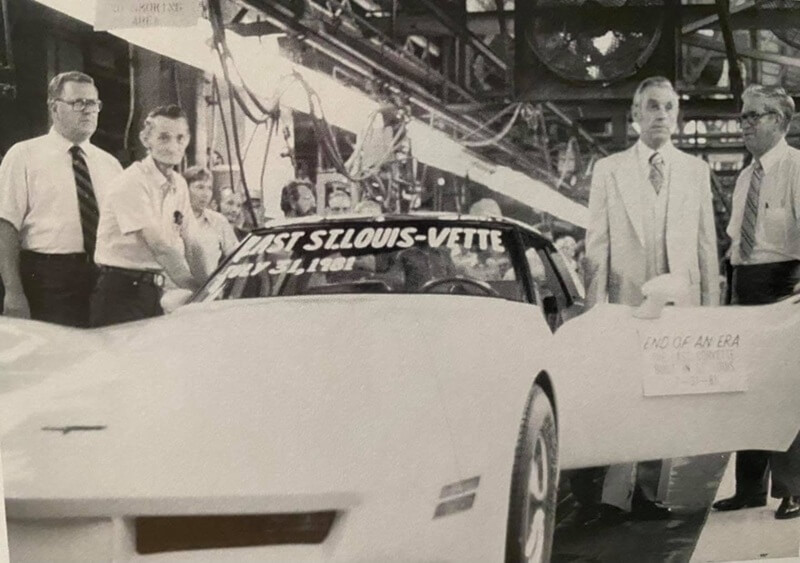
For 1977–1981 St. Louis cars the situation is better. GM had Allied-Vaughn archive the dealer invoices on microfiche, and those can still be ordered through the GM Media Archive invoice order form. When production moved to Bowling Green in 1981, the plant manager was allowed to donate the build records to the National Corvette Museum, which is why later cars are much easier to document.
One additional resource worth knowing about is the NCRS Historic Document Service. Available only to NCRS members, it can provide a Shipping Data Report for many 1962 through 1975 Corvettes. The report typically includes the original dealer code, dealer name and address, and the production date. It does not list options, but it can help you track down the original selling dealer and open the door to further research.
How to Trace the Original Options
When you don’t have a factory invoice, you have to work with what’s still on (or in) the car. These are the main sources I use and recommend:
-
The Tank Sticker
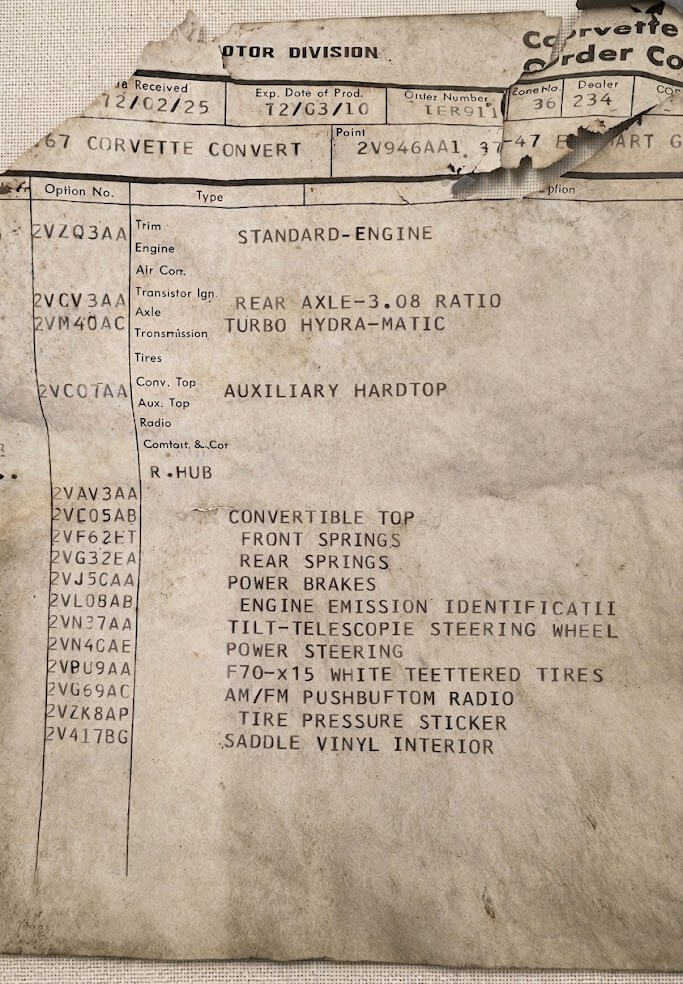
This is the ultimate documentation for a C3. During production, a paper copy of the production information was attached to the top of the fuel tank. This document is commonly referred to as the tank sticker, build sheet, or vehicle manifest. It lists the VIN and every RPO the car was ordered with.
If the tank has never been removed or replaced, this document may still be intact. Though decades of dust, moisture, and fuel vapors can cause deterioration, a carefully recovered tank sticker provides definitive proof of factory options.
-
The Trim Tag
Located on the driver-side A-pillar, this metal tag indicates the original exterior paint code, interior trim code, and the Time Build Code (the date the body was assembled). On many years it also shows the interior material such as leather, vinyl, or cloth. While it does not list the engine or drivetrain options, it clearly defines the original color combination and interior specification. You can decode the codes with the Corvette C3 Trim Tag Decoder.
-
Engine Stamping Pad and Casting Numbers
The engine stamp pad is located on the front passenger side of the block, near the water pump. It provides two critical pieces of information:
- Partial VIN: Confirms whether the block matches the car’s production sequence number.
- Engine Suffix Code: A two- or three-letter code that identifies the exact engine variant, horsepower rating, and the transmission it was paired with.
Additionally, the block casting number and date code on the rear flange help verify that the engine casting predates the car’s assembly date. You can decode these stamps with the Corvette C3 Engine Code Decoder.
-
Physical Component Details
Certain factory options required specific physical modifications that are difficult to replicate cleanly:
- Tachometer Redline: The redline on the instrument cluster was tailored to the engine type (for example 5300 rpm for base engines, 6000 rpm for hydraulic lifter performance engines, and 6500 rpm for solid-lifter big blocks). See more details on the C3 cockpit gauges page.
- Factory Cutouts and Wiring: Options like air conditioning and power windows left unique harness routing, firewall pass-throughs, and mounting locations.
Here’s a short video showing how to locate and carefully inspect the tank sticker: How to Find the Tank Sticker on a C3 Corvette.
These details won’t replace a tank sticker, but they often confirm (or raise questions about) what the paperwork claims.
You can see a real-world example of this kind of decoding work on my 1976 Corvette.
Continue Exploring

Decoders Hub
VIN and trim tag decoders, checks, and guidance for authenticity and data lookups.

C3 Years Hub
Spotter guides and model‑year differences with jump links to each year’s in‑depth pages.

Articles Hub
Technical guides, history deep‑dives, buyer notes, and special features for the C3 era.
Share Your C3 Knowledge
Have insights to share? We welcome your expert feedback, technical discussions, and Corvette-related stories. Your contributions help keep this Corvette community thriving! Join the conversation below.
Page last updated: August 2026