
Corvette C3 Mileage: What Really Matters
In the world of vintage automobiles, odometer readings are often the primary focus of initial inquiries. While mileage remains a relevant metric, its significance in classic cars differs fundamentally from that of modern vehicles. For a classic such as the Chevrolet Corvette C3, the figure displayed on the instrument cluster offers only a fragmented perspective of the vehicle’s true condition.
Why Mileage on a Corvette C3 Can Be Misleading
Mechanical odometers from the 1968–1982 era are prone to failure, sticking, or intentional disconnection. They also reset to zero after surpassing 99,999 miles, providing no indication of whether the vehicle has traveled 43,000 or 143,000 miles. As a result, claims of “all-original, low-mileage” should be approached with healthy skepticism unless supported by verifiable documentation.
High mileage does not inherently equate to a worn-out Corvette. In many cases, a well-driven C3 that has received consistent mechanical care performs better than a low-mileage survivor that has spent decades sitting idle.
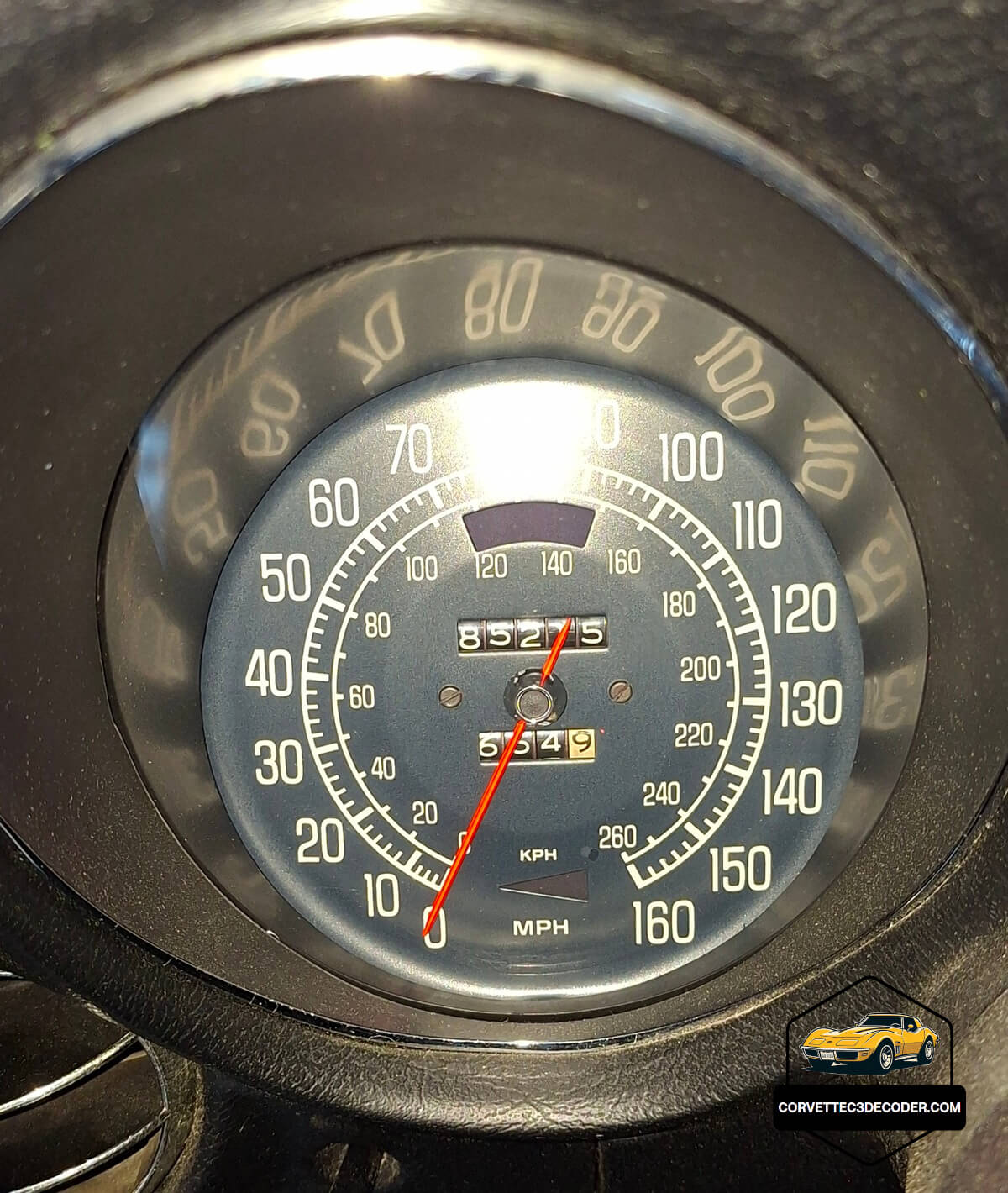
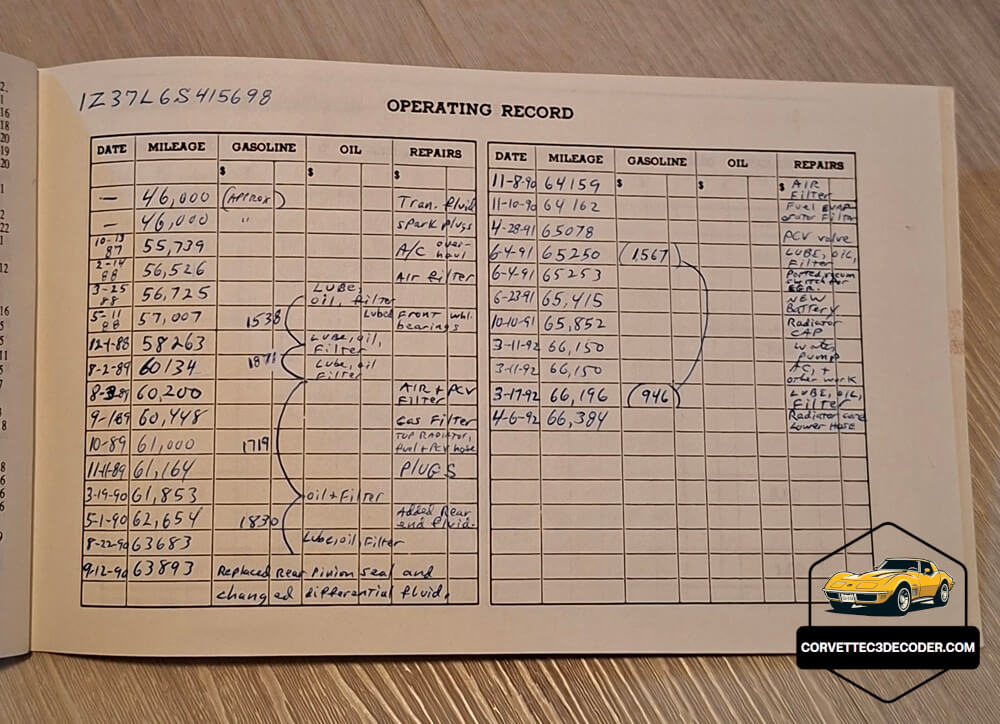
The longevity of a Corvette is dictated by its maintenance history rather than its odometer reading. When evaluating a C3, the following factors provide a far more accurate assessment of its true condition.
-
Documented Service History
Regular oil changes, cooling system maintenance, ignition service, and brake work are far more meaningful than the mileage number.
-
Powertrain Overhauls
A professionally rebuilt small-block or big-block engine, or a refreshed TH350 or TH400 transmission, effectively resets the mechanical life of the vehicle. In such cases, chassis mileage becomes a secondary concern.
-
Chassis and Suspension Condition
Fresh bushings, ball joints, shocks, steering components, and braking hardware dramatically improve drivability and safety. Many C3s still ride on original rubber components that are long past their intended lifespan.
-
Structural Integrity
For the Corvette C3 specifically, the condition of the birdcage, windshield pillars, rocker channels, and frame rails is vastly more important than mileage. Hidden corrosion in these areas can turn a “low-mileage gem” into a structural liability.
What Matters More Than Mileage
An odometer reading should be a secondary consideration when evaluating a Corvette C3. A thorough physical and functional inspection reveals far more about the car’s true condition.
Key questions to ask during evaluation:
- Does the engine start cleanly from cold and settle into a stable idle?
- Does the transmission engage smoothly, and does the car track straight under braking?
- Are there signs of rust in the birdcage, windshield frame, rocker channels, or rear trailing arm mounts?
- Do the body panels align correctly, and is there evidence of previous fiberglass repairs or hidden damage?
- Do the vacuum-operated headlights and wiper door function properly?
- Are suspension components original or recently replaced?
For a more comprehensive checklist of what to inspect when buying or evaluating a C3 Corvette, you can refer to my detailed Corvette C3 Buyer’s Checklist here: Corvette C3 Buyer’s Checklist.
Final Thoughts on Corvette C3 Mileage
Classic cars, especially Corvette C3s, are all about the experience: that sound, the feel, the smell, and the mechanical connection you get when you are actually driving the car instead of just riding in it.
Mileage is part of the story, but it is only a footnote, not the headline. A car that has been driven, maintained, and genuinely enjoyed is almost always a better bet than one that has been preserved by sitting still for decades.
When I bought my 1976 Corvette, I went through the car’s full history. It came with a very complete record of service and all the steps the car had gone through over the years. The Corvette had been well maintained and kept in regular use, even though it was driven relatively few miles each year, so the odometer reading is quite low. The car had also always been stored in a garage, which was easy to confirm by looking at the clean condition of the birdcage.
Check the paperwork, look underneath, start it up, take it for a drive, and pay close attention. And when in doubt, trust your gut more than the number on the dash.
Continue Exploring

Decoders Hub
VIN and trim tag decoders, checks, and guidance for authenticity and data lookups.

C3 Years Hub
Spotter guides and model‑year differences with jump links to each year’s in‑depth pages.

Articles Hub
Technical guides, history deep‑dives, buyer notes, and special features for the C3 era.
Share Your C3 Knowledge
Have insights to share? We welcome your expert feedback, technical discussions, and Corvette-related stories. Your contributions help keep this Corvette community thriving! Join the conversation below.
Page last updated: March 2026