
Evolution of the Radio in the Corvette C3
The Chevrolet Corvette C3 offered a wide variety of factory radio options during its 15-year production run. Early models treated the radio as a true luxury item, while later years made it more standard and feature-rich at the same time as the C3 evolved from a pure sports car towards more of a grand touring car. The radio was not standard equipment until 1979, when an AM/FM radio became standard equipment across all models. Nevertheless, almost every Corvette left the factory with a radio ordered as an option.
1968 Optional Delco Radios and Basic Designs
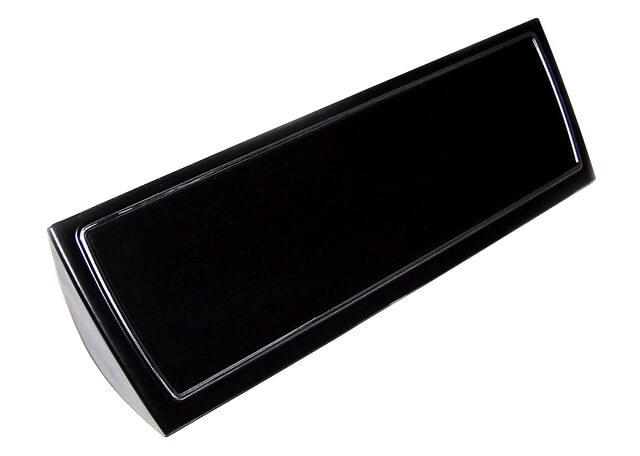
Corvettes from 1968 to 1978 did not include a radio as standard equipment. If no radio was ordered, a semi-gloss black block-off plate filled the dashboard opening to maintain a clean factory appearance.
For 1968, two Delco radio options were available: AM/FM radio (U69) and AM/FM stereo radio (U79). The faceplate on both displayed the "Delco" logo. The stereo model featured a green "Stereo" indicator light that lit up when receiving FM stereo broadcasts.
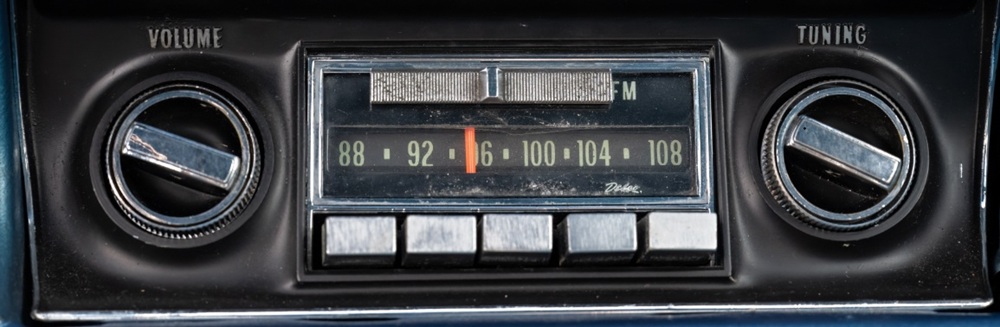
The radio featured two primary knobs: volume on the left and tuning on the right. Stereo models featured secondary control rings under the main knobs: tone on the left and balance on the right. Mono models included only the tone control ring on the left, with no balance adjustment. In 1968 the knob design evolved mid-year: early production used painted silver outer rings and faces while later units received chrome plating.
1969-1971: Refinements in Knob Aesthetics
The no-radio standard continued in 1969 to 1971, with the same semi-gloss black block-off plate used when the option was declined.
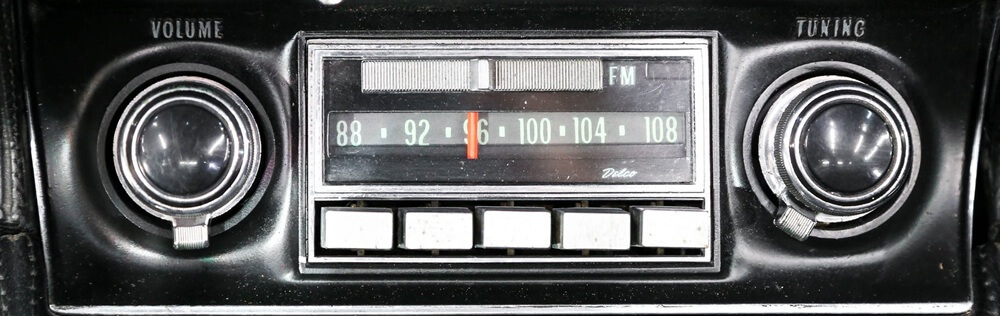
AM/FM radio (U69) and AM/FM stereo radio (U79) remained available with the same faceplate markings and stereo indicator. The knobs were updated to shiny black plastic with silver accents, giving a cleaner, more modern appearance compared to the earlier chrome versions. Balance secondary controls were exclusive to stereo models.
1972-1976: Symbolic Knob Icons and Consistent Options
From 1972 through 1976 the factory continued the no-radio standard configuration, using the semi-gloss black block-off plate for non-radio cars.
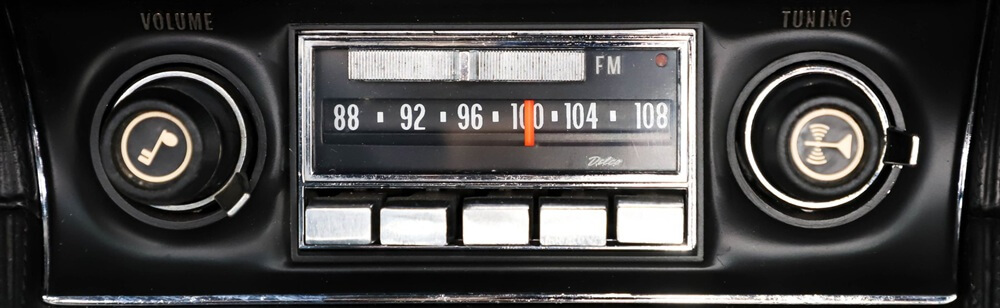
The Delco AM/FM radio (U69) and AM/FM stereo radio (1972: U79) (1973-1976: U58) options carried over, including the FM stereo indicator light on stereo units. A nice period detail appeared on the knobs: the volume knob was dull black rubber with a small musical note emblem, while the tuning knob featured an antenna icon. Stereo models featured secondary rings for both tone (left) and balance (right), while the mono version had only the tone ring on the left. In 1976, the Delco logo appeared as a small badge on the left side of the faceplate, unlike the text placement on the right side used in 1972–1975 models.
1977: Redesigned Center Console and Radio Updates
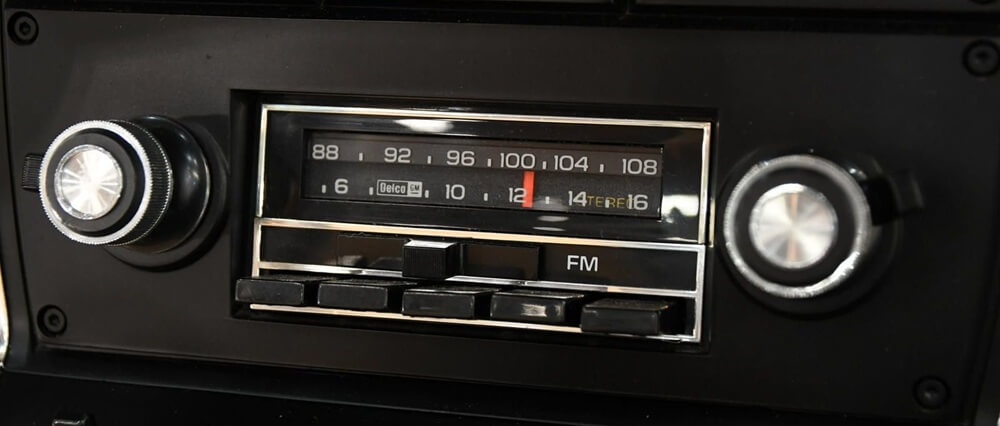
1977 Corvettes continued with the same no-radio base setup as previous years, with a block-off plate available if none was ordered. The redesigned center console introduced that year changed the radio size and mounting to accommodate a broader range of standard Delco units. The radio design and model shifted from the earlier custom Corvette-specific units to more generic Delco offerings.
AM/FM radio (U69) and AM/FM stereo radio (U58) remained the primary choices, while a new option appeared: AM/FM stereo with an eight-track player (UM2). This console redesign made eight-track integration possible for the first time. The primary knobs received serrated silver edges around a black center with a silver circle in the middle, adding a more refined and textured appearance. Secondary tone and balance controls were finished in gloss black plastic.
1978: 25th Anniversary Year and CB Radio Introduction
The 1978 Corvette marked the model's 25th Anniversary. No radio was standard, and the block-off plate remained available.
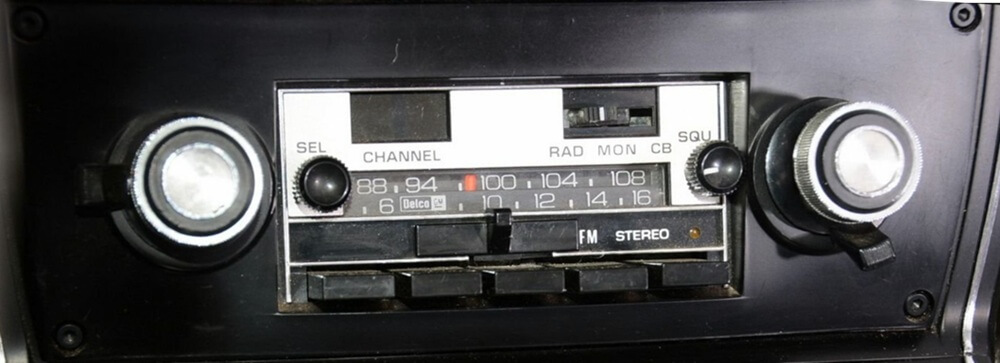
The basic design remained the same as the previous year. Four radio choices were offered: AM/FM radio (U69), AM/FM stereo radio (U58), AM/FM stereo radio with eight-track player (UM2), and AM/FM stereo radio with CB radio (UP6). The Citizens Band radio was a major trend in the late 1970s, especially popular among long-distance drivers.
1979-1980: Radio Becomes Standard Equipment
From 1979 onward the radio became standard equipment and the block-off plate essentially disappeared from new cars.
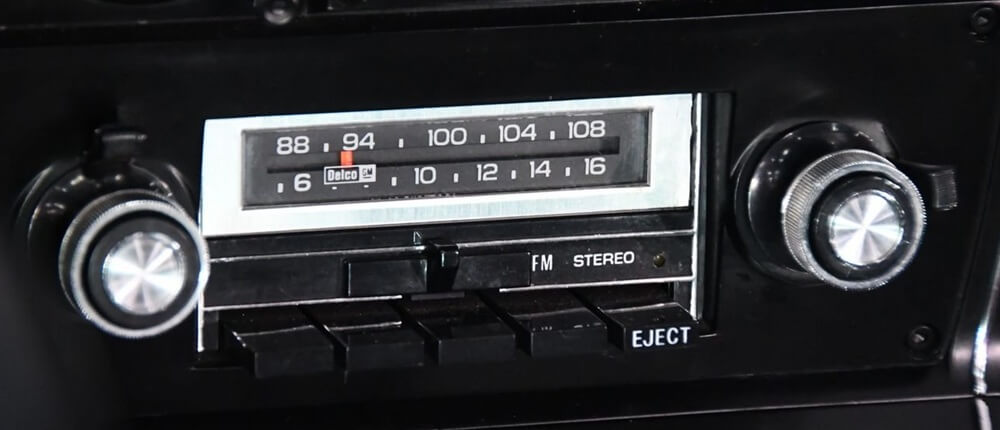
Options continued from 1978: AM/FM radio (U69), AM/FM stereo radio (U58), AM/FM stereo radio with eight-track (UM2), AM/FM stereo radio with CB (UP6), and with the addition of an AM/FM stereo radio with cassette player (UN3), reflecting the rapid shift away from eight-track tapes.
1981 - 1982: Introduction of ETR and More Combinations
In 1981, the AM/FM stereo radio (U58) became standard equipment, as the mono radio was no longer offered as an option. The big new feature was the arrival of Electronically Tuned Receivers (ETR), which brought more precise, digital-style tuning. Radio combinations became more versatile, now offering stereo reception paired with an eight-track player (UM4), eight-track + CB (UM5), cassette (UM6), or cassette + CB (UN5).
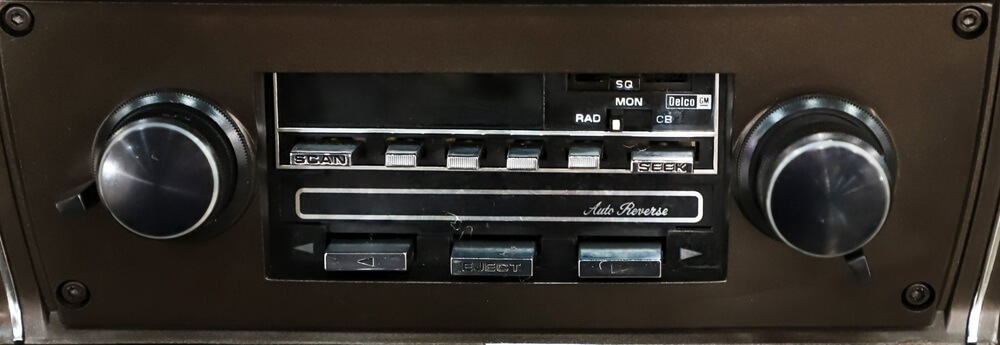
For the final C3 year in 1982, the radio lineup largely followed the 1981 offerings. However, the eight-track + CB combination was discontinued as eight-track technology rapidly faded from the market, and it was replaced by the cassette player option (UN5). This evolution of C3 radio systems clearly shows how Chevrolet responded to shifting consumer preferences, moving from basic optional radios to fully integrated entertainment systems.
Personal Project: Returning to the Original Radio
My Corvette currently has a 1990s aftermarket cassette player installed, but I'm restoring it by fitting an original period-correct Delco Stereo AM/FM radio that I found. At the same time as buying the radio, I also picked up the separate stereo amplifier required for it. The amplifier is located on the passenger side, behind the map pocket. The amplifier differs depending on whether it's for a mono or stereo setup. The 1976 model-year radio is otherwise similar to the 1972–1975 units, but it features a one-year-only design with the Delco logo (which had previously been in script form). This logo style continued in the redesigned Delco radios in the following years.
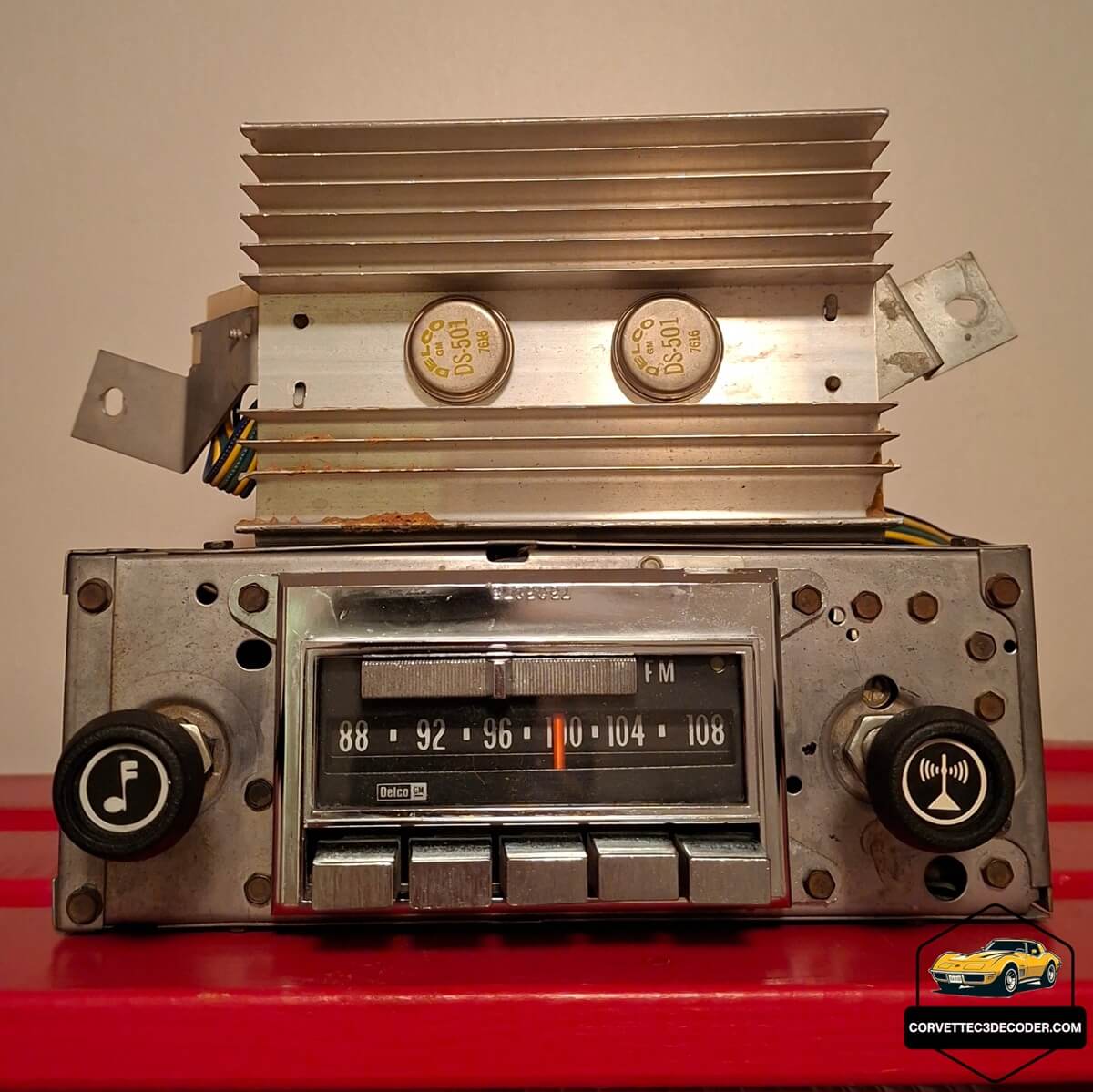
Original Delco radios require 10-ohm speakers, although 8-ohm speakers will also work, but they cannot be used with the 4-ohm speakers that are commonly used in modern setups. There are also retro-looking aftermarket radios available with modern internals, and companies that can upgrade the internals of an original radio to modern standards while keeping the classic exterior appearance. Personally, I rarely listen to the radio while driving, I prefer the sound of the V8, so the original radio works perfectly for me. I also want to restore the exterior look to factory original. The Delco radio with its knobs and antenna mast really gives the dash that clean and classic factory feel I’m aiming for. Those note and antenna icons on the knobs add such a neat and authentic period touch.
Continue Exploring

Decoders Hub
VIN and trim tag decoders, checks, and guidance for authenticity and data lookups.

C3 Years Hub
Spotter guides and model‑year differences with jump links to each year’s in‑depth pages.

Articles Hub
Technical guides, history deep‑dives, buyer notes, and special features for the C3 era.
Share Your C3 Knowledge
Have insights to share? We welcome your expert feedback, technical discussions, and Corvette-related stories. Your contributions help keep this Corvette community thriving! Join the conversation below.
Page last updated: March 2026